
Last updated August 25, 2026
Free in-home measure and quote - PGT, CGI and CWS impact lines compared on your actual openings, style by style
Sliding glass doors
Impact garage doorsPGTCGI
 Before
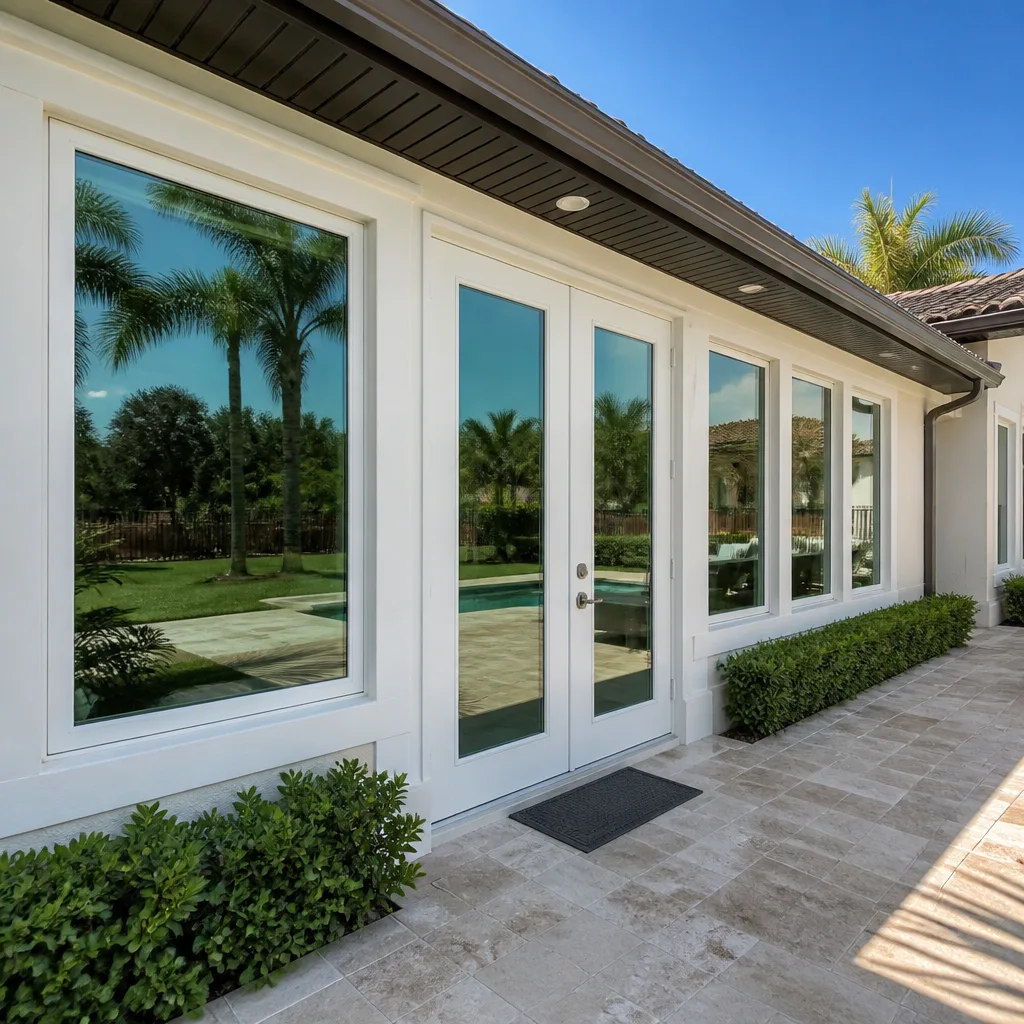 After
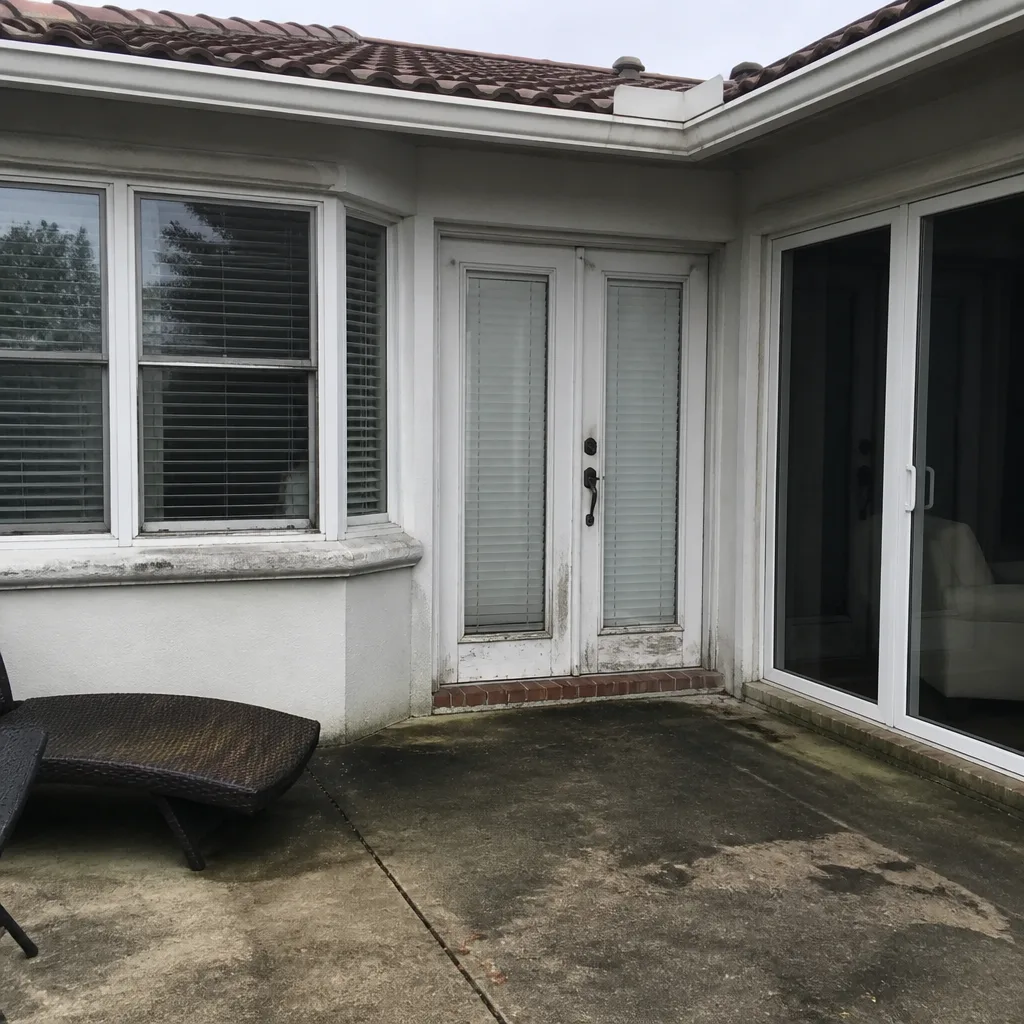 Before
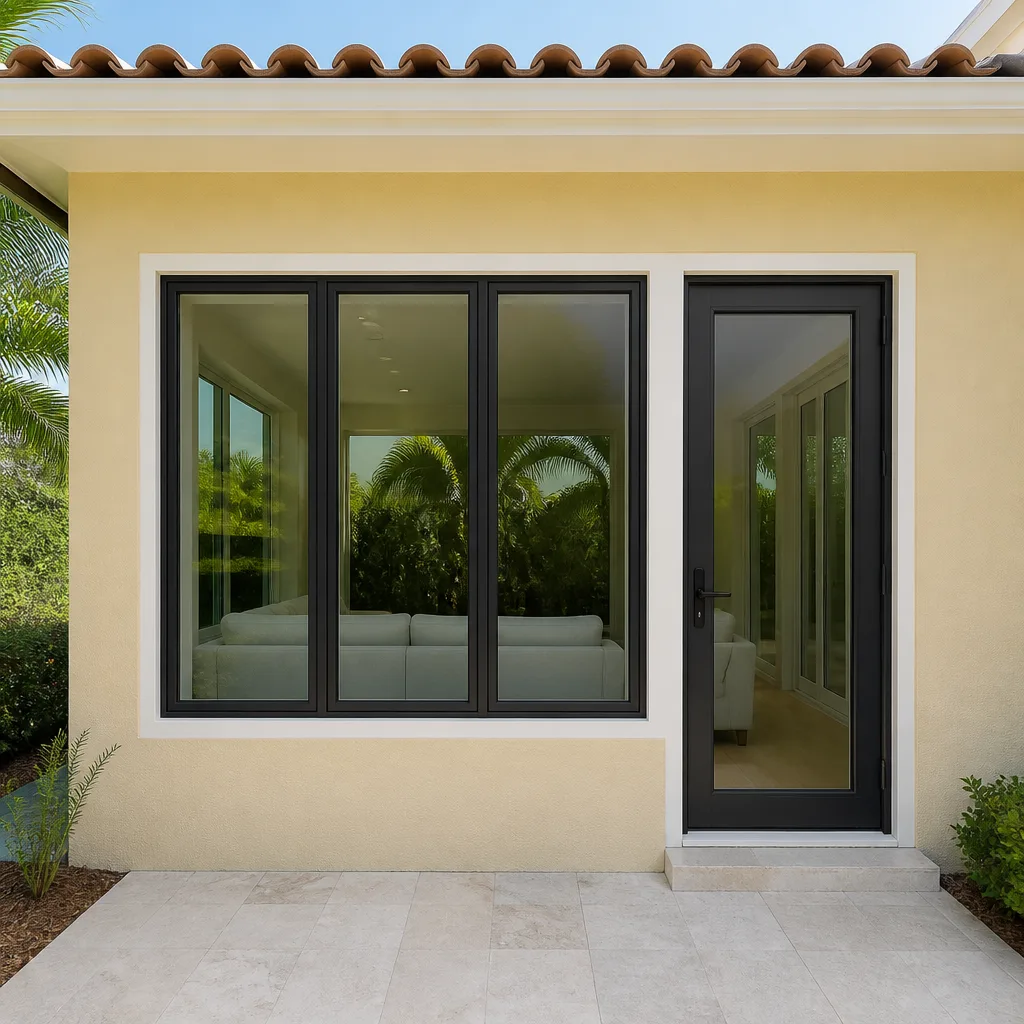 After
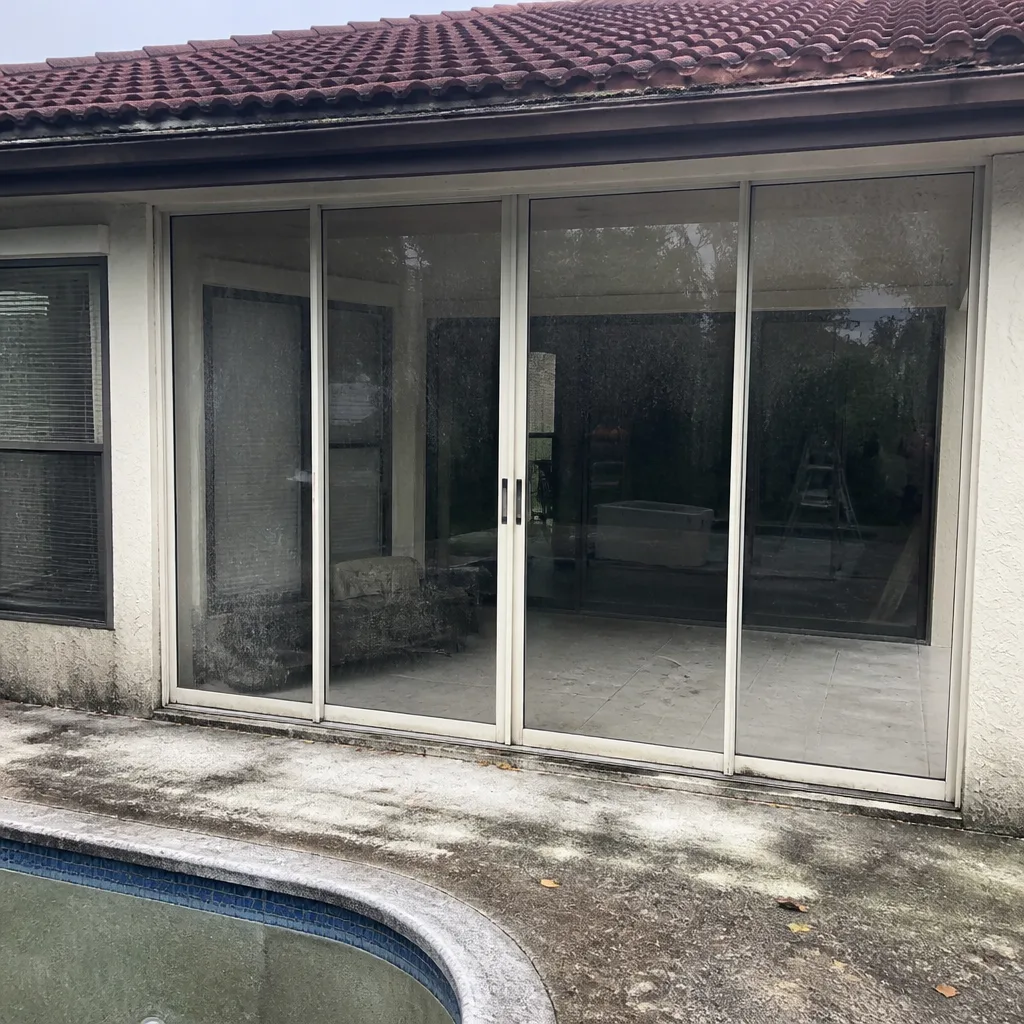 Before
 After
Windows & Doors Warning Signs: A Boynton Beach Homeowner’s Reference Guide
Most Boynton Beach homeowners don’t replace a window because it looks old. They replace it because it stopped doing its job. The average coastal Florida home sees its window seals fail years before the frame shows any visible damage, and a sliding door that sticks in January will bind completely by August. Salt air, sun exposure that runs 230-plus days a year, and afternoon thunderstorms combine to put more stress on windows and doors in Boynton Beach than in almost any other U.S. climate. This guide walks through the warning signs that matter, what they cost to fix, and when a repair stops making sense and a replacement starts.
Quick Answer
Windows and doors in Boynton Beach typically show failure through five specific signals: condensation or fog between glass panes, visible daylight around closed sashes, frames that have softened or bowed, locks and hardware that no longer align, and sliding doors that require real force to move. Interior condensation on the room side is usually manageable; condensation between the panes means the seal is gone and the insulated glass unit needs replacement. If you’re seeing two or more of these signs on windows that are 15 years or older, it’s time to get a professional assessment rather than continuing repairs.
Table of Contents
- Fog and Cloudiness Between the Glass Panes
- Daylight or Drafts Around Window and Door Frames
- Doors and Windows That Stick, Drag, or Won’t Latch
- Softened, Bowed, or Discolored Frames
- Impact Glass Damage, Stress Cracks, and Shatter Patterns
- Energy Bills That Climb Without Explanation
- Hardware Failures: Cranks, Locks, Rollers, and Balances
Fog and Cloudiness Between the Glass Panes
When you see fog or condensation trapped between the two layers of glass in a double-pane window, the hermetic seal has failed. Full stop. There’s no way to clean it from the outside, because the cloudiness is inside the sealed air space. In Boynton Beach, this failure shows up faster than it does inland because the constant humidity works against the seal from the day the window is installed. We see failed seals regularly in homes along the Intracoastal corridor, where salt and moisture load is highest, and in neighborhoods like Leisureville and Chapel Hill where many original windows date to the 1980s and 1990s.
There are three levels of fog-related damage worth knowing:
- Edge fog – a thin ring of haze around the glass perimeter. This is the earliest stage and sometimes stable for years.
- Partial fog – clouding across a third to half of the pane, often worse in late afternoon when the sun hits the east-facing windows hard.
- Full fog – the entire pane is hazy, or you can see mineral deposits streaking inside. At this stage the glass is doing almost nothing for insulation.
The fix is not a repair; it’s an insulated glass unit (IGU) replacement. That means the glass assembly gets swapped out while the frame stays in place. TruePane windows and doors are installed with IGUs sized to the opening, and we measure twice because a sixteenth of an inch changes everything. Average life of a Florida coastal IGU is 10 to 15 years, not the 20 to 25 you’ll hear quoted from northern climates.
Daylight or Drafts Around Window and Door Frames
If you can see daylight through a closed window or door jamb, the weather seal has failed. You can test this yourself with a dollar bill: close the window or door on it and try to pull it out. If it slides free without resistance, the seal is not sealing. This is not a cosmetic issue. In Boynton Beach, an unsealed opening lets in humid air that feeds mold, invites ants and palmetto bugs, and forces your air conditioner to fight an endless supply of outside moisture.
Drafts in older Boynton Beach homes are often worse around the western-facing windows, which take the afternoon sun and expand and contract more dramatically. Common draft patterns we identify during free estimates include:
- Gaps at the bottom corners of single-hung windows where the sash has pulled away from the frame
- Slider doors that rattle in their tracks even when locked
- Visible light around the top of entry doors after years of settlement
- Pressure points where caulking has cracked and separated from stucco
For minor perimeter gaps, new weatherstripping often solves the immediate problem. But when the frame itself has warped or the rough opening was never square, repeated weatherstripping is money that disappears in a year. We’ve replaced windows in Boynton Beach homes where the previous owner caulked and re-caulked for a decade, never fixing the underlying racking. Sometimes the honest answer is that the window is no longer repairable.
Doors and Windows That Stick, Drag, or Won’t Latch
A sliding glass door that needs two hands and a hip-check to open is not normal. The same goes for a double-hung window that needs a screwdriver as a pry bar. Sticking, dragging, and refusal to latch are signs that something has shifted: the frame has settled out of square, the rollers are seized with sand and salt corrosion, or the track itself has worn down.
In Boynton Beach specifically, sliding door rollers corrode faster than anywhere we work in Palm Beach or Broward County. The constant humidity plus salt air creates a grinding paste in the roller bearings. Here’s what we troubleshoot, in order:
- Track obstruction – sand, debris, and pet hair build up under the door. Clean the track first.
- Roller wear – if the door still drags after cleaning, the rollers are likely shot. These are replaceable parts.
- Frame settlement – if a new set of rollers still leaves the door catching at one end, the header or subfloor has shifted and the frame needs to be re-squared.
- Threshold issues – on entry doors, a worn or cracked threshold can cause the door to drag at the bottom edge.
Most sticking doors and windows in Boynton Beach can be brought back with new rollers, new balances, or a re-alignment of the frame. The ones that can’t are typically in homes where the foundation has settled enough that no amount of adjustment will bring the opening back to square. At that point, replacement becomes the cheaper route over the next five years.
Softened, Bowed, or Discolored Frames
Wood frames and stucco returns in Boynton Beach take a beating from termites, moisture, and UV. Press a finger into a wood frame: if it gives or feels spongy, you have rot. Termite damage in Boynton Beach is often hidden behind paint that still looks fine from two feet away. The telltale sign is a hollow sound when you tap the wood with the back of a screwdriver. If it sounds like a drum, the frame is being eaten from the inside.
On the vinyl side, UV degradation shows up as discoloration, burning white chalk onto your hand when you touch it, or bowing that becomes visible when the window is closed and the line of the frame no longer matches the line of the sash. A bowed vinyl frame will not get better. It has been through too many expansion cycles.
What we tell Boynton Beach homeowners is this: if the frame goes, the window goes. You can replace glass and hardware many times, but the frame is the structural part. In wood, we look for:
- Soft spots near the bottom corners where rain splashes up off the driveway or patio
- Discoloration around the weep holes, which are meant to drain water but often clog with dirt and hold moisture against the wood
- Paint that bubbles or flakes in a map pattern, indicating water is moving through the wood behind it
- Evidence of frass (termite droppings), which looks like fine coffee grounds
Impact Glass Damage, Stress Cracks, and Shatter Patterns
Boynton Beach sits inside the Florida High Velocity Hurricane Zone, which means every replacement window and door must be impact-rated or protected by a shutter system. Impact glass and shutters protect against wind-borne debris, but they can still show damage. A window that has taken a hit might not break. Instead, it can develop a spider crack: a web of fine lines radiating from one point. The glass has done its job and absorbed the impact, but it’s now compromised and should be replaced before the next storm.
Stress cracks look different. They often run from edge to edge without any visible impact point. In Boynton Beach, we see stress cracks in homes where windows were installed too tight in their rough openings. When the building expands in the summer heat, the frame pinches the glass and it cracks. Common causes include:
- Improper shimming during installation
- Using the wrong glass thickness for the frame’s pressure requirements
- Temperature differential between sun-exposed and shaded parts of the same pane
- Settlement and racking that transfers stress into the glass
If you see a stress crack in one window, expect to see the same crack pattern in siblings along the same wall. The root cause is often systemic to the installation. Impact glass in Boynton Beach is not optional, so any crack, chip, or compromise in impact-rated glass means the protective layer is no longer trustworthy. The next debris hit could shatter it.
Energy Bills That Climb Without Explanation
In a Boynton Beach home, windows and doors can be responsible for 25 to 30 percent of the cooling load. That number comes from the U.S. Department of Energy, and it tracks with what we see on homes in the city. When your FPL bill climbs and your thermostat habits haven’t changed, old windows are usually a factor. The signs inside the house confirm it: the area near a west-facing window feels like a radiator at 3 p.m., the glass itself is hot to the touch, and some rooms never quite reach the set temperature on the thermostat.
Old single-pane windows from the 1970s and 80s have almost no insulating value. Even double-pane windows whose seals have failed are barely better than single-pane, because the insulating gas (usually argon) has leaked out and been replaced by humid Boynton Beach air. The practical test is to stand near each window at the hottest point of the day and feel for heat radiating through. If the window is doing its job, the glass should feel warm but not hot, and the air near it should feel close to room temperature.
Replacement windows with low-emissivity (Low-E) coatings and argon-filled glazing make the most visible difference in: west-facing bedrooms and living areas, east-facing breakfast rooms, and any glass that receives direct afternoon sun. The investment is real, but so is the return when you factor in less strain on the AC compressor and fewer midday cool-down cycles.
Hardware Failures: Cranks, Locks, Rollers, and Balances
Hardware fails more often than glass. In Boynton Beach, we replace hundreds of door rollers, window balances, sash locks, and crank mechanisms every year. The environment accelerates corrosion, and the typical homeowner doesn’t notice a part getting harder to use until it has already failed. Signs we tell homeowners to watch for:
- A casement window crank that requires more turns than it used to, or that slips when it reaches the end of its travel
- Sash locks that no longer align because the two halves of the lock have drifted apart
- Double-hung windows that slam shut when released instead of staying put (the balance spring or coil has failed)
- Slider door rollers that grind, scrape, or catch at one spot in the track
- Entry door deadbolts that require wiggling the handle to engage, meaning the door slab has sagged
Parts are replaceable, and a complete hardware overhaul on a good frame often costs a fraction of a window replacement. The important thing is not to let a failing part go unaddressed. A sagging door that’s left alone will damage the threshold, then the floor, then the frame. A window balance that’s broken will lead to the sash being dropped and cracked. We treat hardware replacement as an investment in the frame. If the window is otherwise solid, fix the hardware. Do it before the damage spreads.
Common Mistakes to Avoid
- Assuming fogged glass is a cleaning problem. If the haze is between the panes, a paper towel will never reach it. The seal is failed, and the glass unit must be replaced.
- Replacing one window now and another later. You’ll end up with mismatched frames, different glass tints, and lost economies of scale. Order all same-side windows at once.
- Caulking over a draft instead of finding out why the draft exists. Gaps usually indicate frame movement or out-of-square rough openings. Caulk works for a season and then fails again.
- Choosing glass by price alone. In the Boynton Beach wind zone, a cheap window is not a bargain. Impact rating, Low-E coatings, and proper installation are not optional extras.
- Ignoring a sticking slider door. A door that binds today will be a door you force, then break. The track, the rollers, and the frame all take damage from the struggle.
- Skipping the permit on a window replacement. Boynton Beach has strict code requirements for impact-rated openings. An unpermitted install can complicate your insurance and your future sale.
- Waiting until hurricane season to replace impact glass. Installers are booked months out by June. Plan replacements for the fall and winter when demand is lower.
When to Call a Professional
Call a professional when you see fog between panes, when a window or door no longer operates the way it should, when frames are soft or bowed, or when you see any crack in impact glass. These are not cosmetic concerns, and they rarely improve on their own. For the Boynton Beach homeowner, early assessment saves money: a $300 hardware repair today prevents a $1,800 window replacement in two years. TruePane Windows & Doors offers free estimates in Boynton Beach – call (561) 708-6771 to have a technician walk your openings with you and tell you what’s actually wrong and what’s still fine.
Frequently Asked Questions
Window replacement in Boynton Beach typically runs $600 to $1,400 per opening for mid-grade impact-rated vinyl, with wood and premium lines running higher, and full frame-out replacements on the upper end of the range. Call (561) 708-6771 for a free, written line-item estimate on your exact openings – no surprises, no add-ons after the fact.
Plan on 15 to 20 years for impact-rated windows in Boynton Beach, with 10 to 15 years as a realistic life for the insulated glass units before seals fail. Coastal exposure shortens these timelines; inland Boynton Beach homes may see a few more years.
If old or failed windows are the source of the heat gain, yes – new Low-E, argon-filled windows can materially reduce your cooling load, especially on west-facing openings that bake in the afternoon sun. Call (561) 708-6771 and we’ll help you figure out where the heat is actually getting in.
Grouping your replacement by elevation (all west-facing, for example) gives you matching glass, matching frames, and a better per-window installed price than piecemeal replacements, and it keeps the building envelope consistent across the same exposure.
Yes, we handle permitting and inspections as part of every replacement job. Window and door replacements in Boynton Beach must meet current High Velocity Hurricane Zone requirements, and the permit record protects the resale value of your home.
If the frame is sound and the opening is square, replacing the insulated glass unit is often the right call and costs significantly less than a full window replacement. We’ll assess each opening honestly and show you the price difference on paper.
The Bottom Line
The warning signs are not subtle: fog between the panes, daylight where daylight shouldn’t be, frames that yield under a thumb, hardware that argues with you, and impact glass that’s taken a hit. Each one is a message that the protective envelope of your Boynton Beach home has degraded. Catch these signs early and the fix is often a simple, affordable repair. Live with them, and the cost compounds. TruePane Windows & Doors has served Boynton Beach since 2008, and our team answers the phone every hour of every day. If any of these warning signs sounds like your house, call (561) 708-6771 for a free estimate. We’ll look, we’ll measure, and we’ll tell you the truth about what needs doing.
Written by Dale Kessler, Owner at TruePane Windows & Doors, serving Boynton Beach since 2008. Visit the TruePane Windows & Doors home page to learn more about our work and our standards.
Six Reasons Homeowners Choose TruePane Windows & Doors
Impact systems engineered to design pressures up to +/-100, matched to your wind zone - your openings hold when the storm arrives.
Low-E insulated impact glass from our manufacturer lines commonly cuts monthly cooling bills 20-30%.
Laminated impact glass shuts out up to 40% of outside noise - traffic, neighbors, weather.
Monitoring services run $30-90 a month. Laminated impact glass resists forced entry around the clock, with no subscription.
Florida homeowners average around 25% savings on the windstorm portion of their policy after protecting every opening - some homes qualify for more.
A full impact package upgrades curb appeal, buyer confidence and appraised value in one project.