
Last updated August 25, 2026
Free in-home measure and quote - PGT, CGI and CWS impact lines compared on your actual openings, style by style
Sliding glass doors
Impact garage doorsPGTCGI
 Before
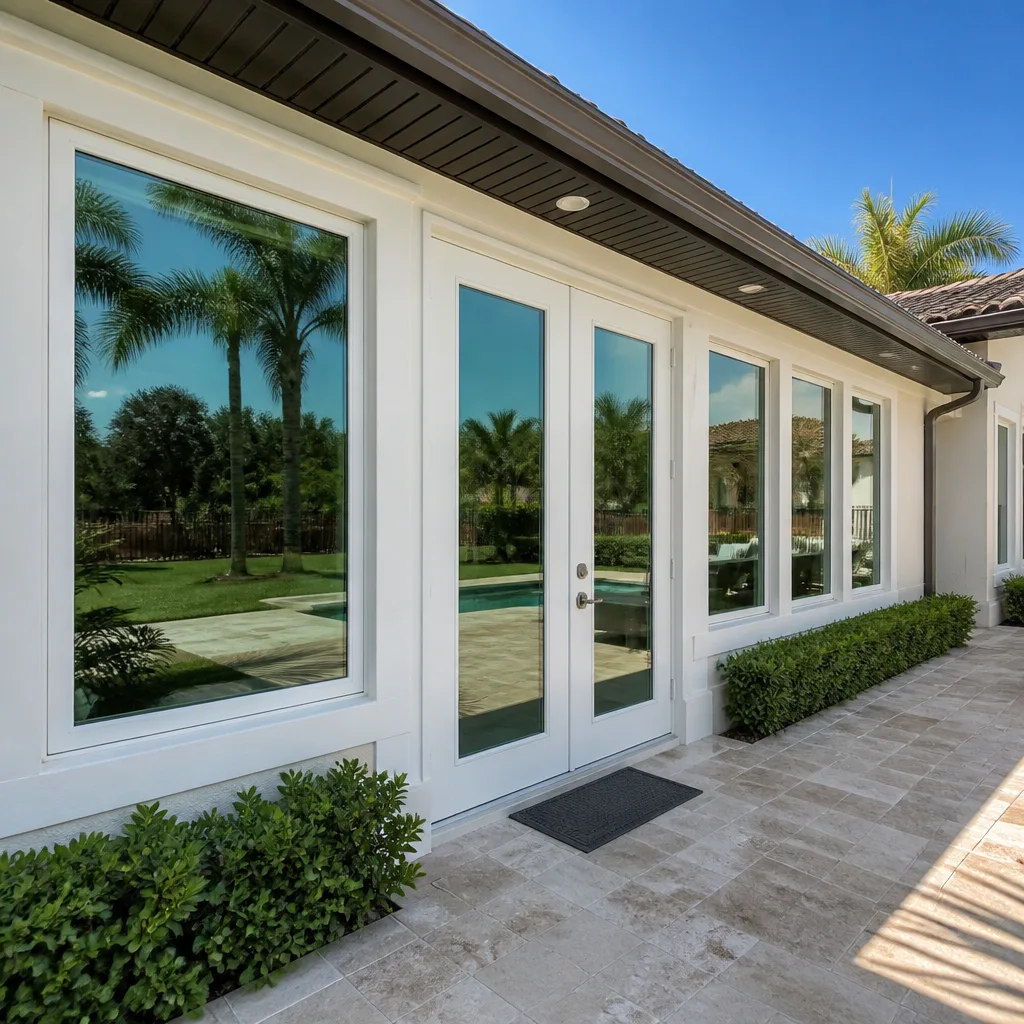 After
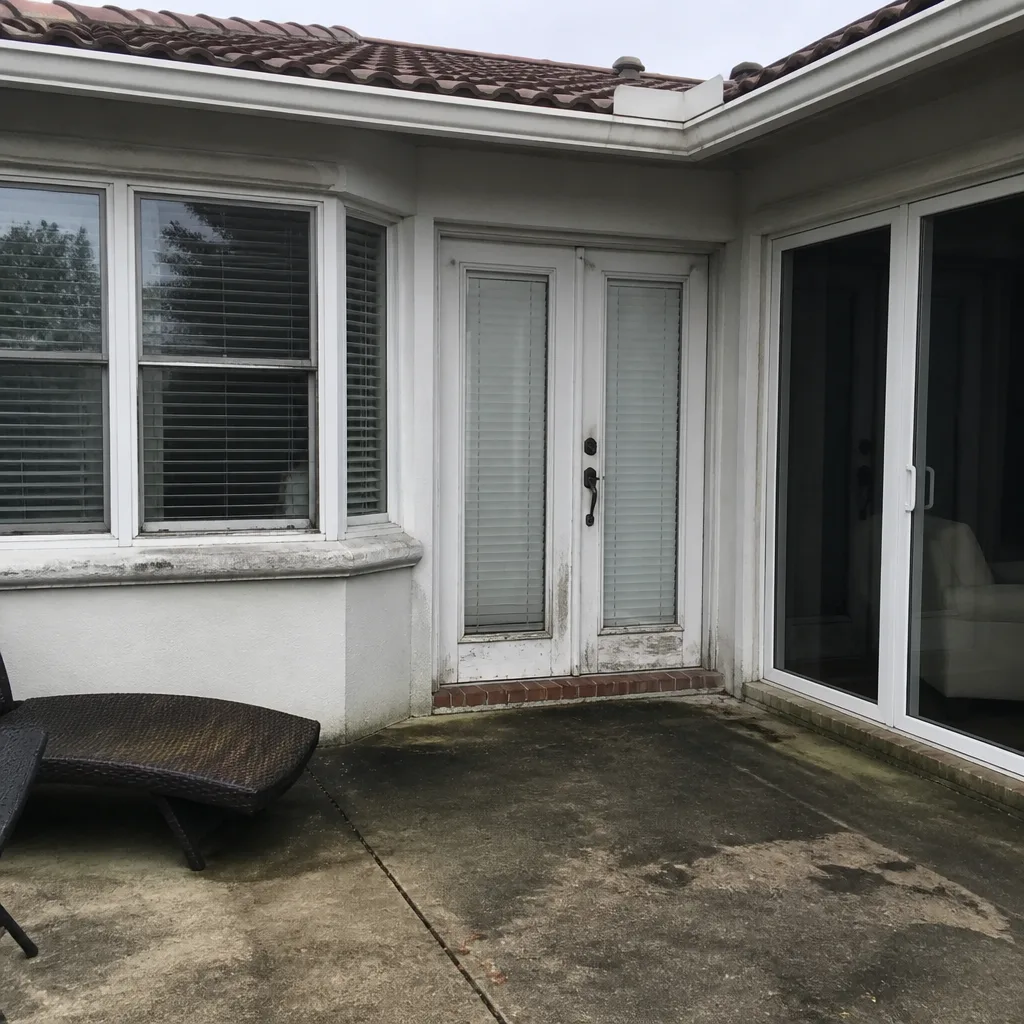 Before
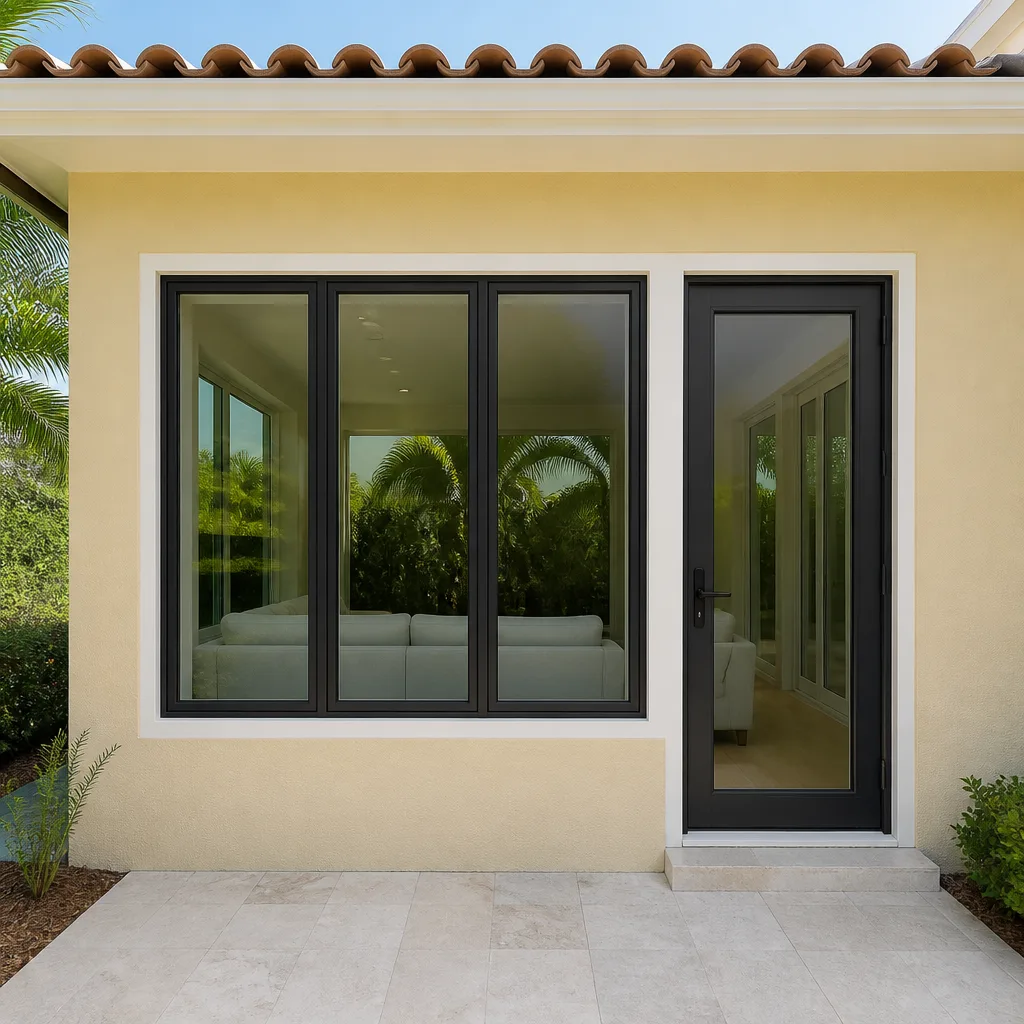 After
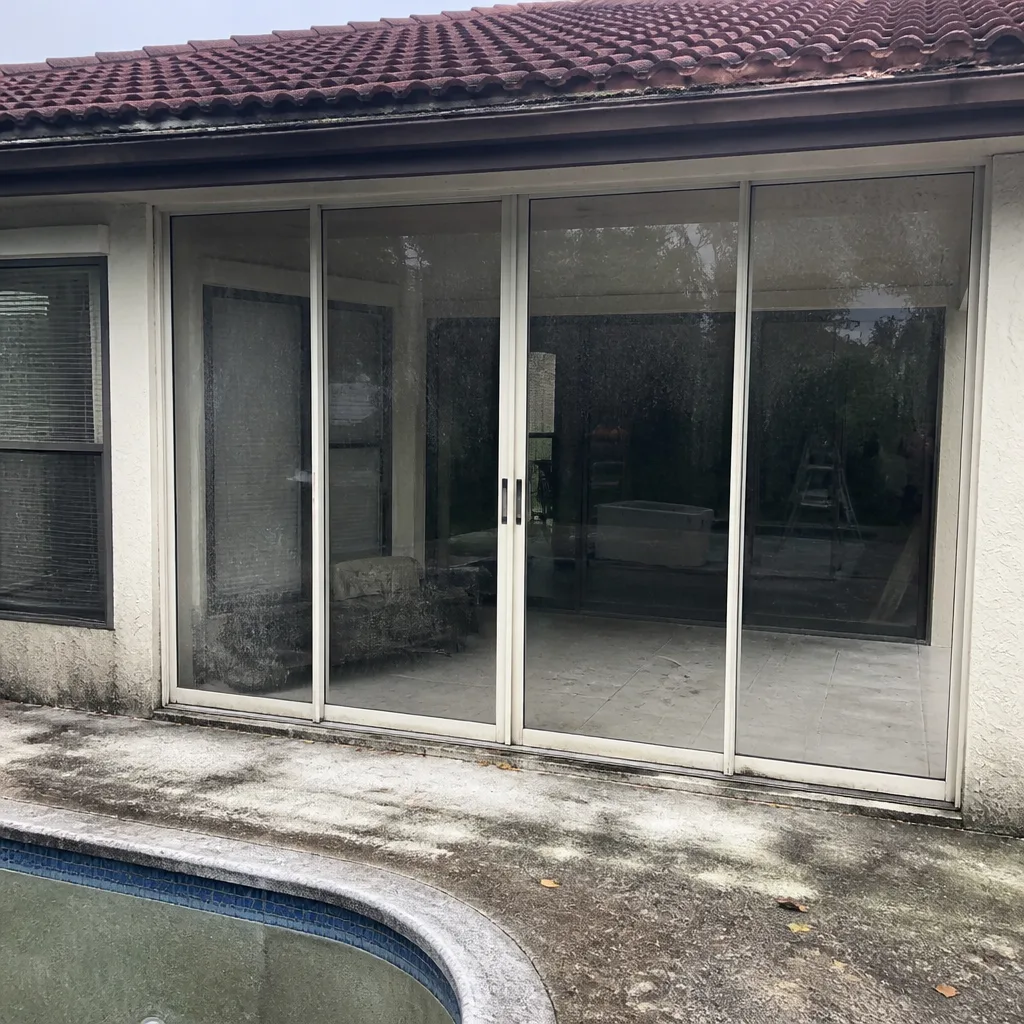 Before
 After
Windows & Doors Permits, Codes & Inspections in FL: What You Need to Know
Here’s something most homeowners don’t realize until it’s too late: the window or door that fits your house perfectly may still be illegal to install without the right paperwork. Florida is not a “ask for forgiveness later” state when it comes to fenestration. The Florida Building Code treats windows and doors as structural components of the building envelope, not decorative afterthoughts. Get the permit wrong and you’re not just looking at a fine - you’re looking at a homeowner’s insurance claim denied after the next hurricane, a lien on your property when you go to sell, and an inspector who won’t sign off until the noncompliant unit is torn out and replaced. In Boynton Beach, where wind-borne debris rules govern nearly every exterior opening, the paperwork is as important as the flashing. This guide walks through exactly what Florida requires for window and door permits, which code provisions apply, what inspections look like, and how to avoid the five-figure mistakes we’ve seen too many times.
Quick Answer
Window and door replacement in Florida - including Boynton Beach - almost always requires a building permit, with an exception for simple “like-for-like” swaps where the opening is not being modified and the new unit meets current wind-load and impact requirements. The governing standard is the Florida Building Code (currently the 8th Edition, 2023, with Palm Beach County amendments), which sets product approval, wind-borne debris, and energy efficiency requirements. Expect a minimum of one or two inspections. Skipping the permit typically costs more than the permit itself once stop-work orders, double permit fees, and insurance complications are factored in.
Table of Contents
- Do You Need a Permit for Window and Door Replacement in Florida?
- The Florida Building Code: What Actually Applies to Windows and Doors
- Wind-Borne Debris Regions and Impact Requirements
- Boynton Beach and Palm Beach County: Local Code Layers
- Product Approval: Why a Cheap Window Can Fail Inspection
- The Permit Process, Step by Step
- What Inspectors Actually Look At
- Insurance Implications: What Your Carrier Will Ask For
- Common Mistakes to Avoid
- When to Call a Professional
- Frequently Asked Questions
- The Bottom Line
Do You Need a Permit for Window and Door Replacement in Florida?
In nearly every Florida municipality, the answer is yes. Florida Statute 553.79 establishes that a building permit is required to construct, enlarge, alter, repair, move, demolish, or change the occupancy of any building or structure. Replacing a window or exterior door falls squarely under “alter” and “repair.” The Florida Building Code, Residential volume, section R105.1, reinforces this at the code level.
The only routine exception is what the code calls “minor repairs” - and the operative word is minor. Under R105.2, ordinary repairs that do not affect the structure, egress, fire protection, or energy conservation of the building may be exempt. But swapping a single-pane window for a double-pane unit changes energy conservation. Replacing a sliding glass door with French doors changes egress and possibly structural loading. Even a like-for-like window swap involves disturbing flashing, which affects water resistance - and water resistance is a structural concern in Florida’s climate.
In practice, the jurisdictions we work in across Palm Beach County - including Boynton Beach, Delray Beach, Lake Worth Beach, and unincorporated county - issue permits for effectively every window and door replacement. The office will tell you the same thing we will: if an inspector can look at the finished work and tell it’s new, you needed a permit for it.
What happens if you skip it:
- Stop-work order: inspectors do drive-by checks in many Palm Beach County neighborhoods. A truck with new windows in the driveway is a tip-off.
- Double permit fees: most Florida jurisdictions charge a penalty equal to or double the original permit cost when you apply after the fact.
- Insurance risk: if a window installed without a permit fails during a storm, the carrier may deny the claim on the basis that the work was not performed to code - and they will check.
- Resale disclosure: Florida’s seller disclosure form asks about unpermitted work. Buyers now routinely pull permit histories.
For homeowners in Boynton Beach, the question is rarely whether you need a permit - it’s whether you want the contractor pulling it or whether you’re handling it yourself. Both paths are legal. The path that protects your investment is the one that ends with a final inspection on record.
The Florida Building Code: What Actually Applies to Windows and Doors
Florida uses a single statewide building code, updated on a three-year cycle. As of this writing, the 8th Edition (2023) is in effect, with the 2026 9th Edition on the horizon. Local governments - including Palm Beach County and the city of Boynton Beach - may adopt amendments, but they cannot weaken the state code. They can only strengthen it. In practice, Palm Beach County’s amendments are mostly administrative (fees, submittal format), while the wind-load provisions come straight from the state.
For windows and doors, the key code chapters are:
- Chapter 16 (Structural Design): sets the wind speed maps and design pressures that determine what your windows must withstand. In Boynton Beach, the design wind speed is typically 170-180 mph depending on the exact location and exposure category.
- Chapter 17 (Special Inspections and Tests): governs product approvals, which we’ll cover below.
- Chapter 17.6 (Wind-Borne Debris Regions): defines where impact-resistant coverings are mandatory - essentially all of Palm Beach County within a mile of the coast, and specifically all of Boynton Beach.
- Chapter 6 (Energy Conservation): sets the minimum insulation values, solar heat gain coefficients, and air leakage rates for new windows.
- Chapter 13 (Flood-Resistant Construction): applies to homes in FEMA flood zones, of which Boynton Beach has plenty, particularly east of I-95 and along the C-16 canal corridors.
What trips up most homeowners is the interaction of these chapters. A window can pass the wind-load test, the impact test, and the energy test individually - and still fail inspection because it was installed in a flood zone without the required flood-resistant fasteners listed in its product approval. The code is a system, not a checklist.
Wind-Borne Debris Regions and Impact Requirements
Florida is divided into two zones for exterior openings: Wind-Borne Debris Regions (WBDR) and everything else. In a WBDR, every exterior window, door, and skylight must either be impact-resistant (laminated glass that survives a missile test) or protected by an approved storm shutter or panel system. There is no grandfather clause. When you replace a window in a WBDR home, the replacement must meet current impact standards, even if the original window was installed in 1985 and survived twenty storms.
Boynton Beach sits entirely within the WBDR. So does nearly every coastal community from Palm Beach County through the Keys. What that means in practical terms:
- Impact windows have two layers of glass with a polymer interlayer. The glass may crack under impact, but the interlayer holds the pane together and keeps wind and rain out of the house. This is what most Boynton Beach homeowners choose.
- Non-impact windows require approved coverings. If you install a standard window in a non-impact opening, you must also install - or already have - approved storm panels or shutters. The permit will not close without both.
- Doors follow the same rules. Sliding glass doors, French doors, and entry doors all must meet impact or be protected. This includes garage pedestrian doors.
Product approval documentation is mandatory. Every impact product sold in Florida carries a Notice of Acceptance (NOA) issued by the Florida Department of Business and Professional Regulation, or a Miami-Dade County Product Approval (which the state accepts statewide). The NOA lists the exact rated pressures, the maximum size permitted for each rating, and any specific installation requirements - anchor types, embedment depths, fastener spacing. Installing a product larger than its NOA allows is a failed inspection and a voided manufacturer warranty.
We’ve seen homeowners in Boynton Beach’s Quantum Lake and Meadows neighborhoods buy beautiful impact sliders online, only to find the unit was approved for a different size opening and the NOA didn’t cover the larger span. The window arrived on a truck and still couldn’t be installed. That’s a $3,000 mistake that a permit review would have caught for a few hundred dollars.
Boynton Beach and Palm Beach County: Local Code Layers
Boynton Beach operates its own building division, and permit applications run through the city’s e-permitting portal. Palm Beach County has a separate process for unincorporated areas and some smaller municipalities. If you’re not sure which jurisdiction you’re in, the property appraiser’s office will tell you in one phone call.
What’s specific to Boynton Beach:
- Third-party plan review. The city may route residential window and door permits through a contracted plan reviewer. That means the reviewer may ask for engineering calculations even on a simple replacement if the original opening was field-framed.
- Historic district overlays. Parts of Boynton Beach - particularly around the Historic District and certain Ocean Avenue corridors - carry design review requirements. Replacing single-hung wood windows with impact single-hung wood-look windows is usually fine, but the review board wants to see the actual product and finish before they’ll sign the permit.
- Flood zones drive design requirements. East of the Intracoastal and low-lying areas near the C-16 canal fall into FEMA AE zones. Replacement windows in a flood zone must comply with the flood-resistant fastening schedule from the product approval, and doors require flood-resistant hardware. The inspector will check.
- HOA and condo layers. Many Boynton Beach communities - Valencia Isles, Sun Valley, Palm Meadows, Country Club at Boca Raton - have their own architectural review boards on top of the city’s process. The association must approve the product and finish before the city issues the permit. We regularly help homeowners sequence these approvals so the permit application isn’t rejected for missing paperwork.
If you’re replacing windows in Palm Beach County as a homeowner-builder (meaning you’re doing the work yourself on a house you own and occupy), Florida allows it - but you’re signing the permit application as the contractor of record. That puts the liability for code compliance on you, which matters when you sell the house or file an insurance claim.
Product Approval: Why a Cheap Window Can Fail Inspection
Every window and door installed in Florida must carry a current product approval from the state. There is no workaround and no inspector discretion on this point. The Notice of Acceptance is public record and searchable through the DBPR website. If the product isn’t on the list, it doesn’t get installed.
The NOA matters because it’s the engineering behind the product. It states:
- The maximum design pressure (DP) the product is rated to withstand, in PSF (pounds per square foot).
- The maximum size the product can be manufactured at, and the minimum frame depth.
- The approved anchoring method - the specific screw type and embedment depth into wood, concrete, or masonry.
- Whether the product is approved for skylight, door, window, or sliding glass door use.
- The exposure category and wind speed the product is approved for.
What we see in Boynton Beach, repeatedly: a homeowner buys windows from a big-box store or an online discounter. The product is “hurricane-rated” and carries a sticker that says Miami-Dade approved. But the NOA for that exact product line covers the opening at a smaller size, or requires structurally reinforced frames at the larger size, or was issued for a different glazing package than the one shipped. The inspector notices because the sticker’s approval number doesn’t match the unit’s dimensions. The window comes out.
This is precisely why we quote manufacturer lines side by side, on paper, with the product approval documentation attached. Andersen, Pella, and Marvin all maintain current Florida NOAs across their impact lines, but each has different maximum panel sizes and anchoring requirements. The window that works in a 40-inch opening may not be approved for a 48-inch opening next to it. The permit reviewer checks both.
Florida product approvals also expire and are renewed. A window approved in 2015 may have a superseded NOA that’s no longer valid for new installations, even if the manufacturer still sells the same model. Buying new-old-stock windows from a liquidator is a route to an inspection failure.
The Permit Process, Step by Step
Here’s the process we follow for every Boynton Beach window and door replacement, in order:
- Site measure and product selection. We measure every opening twice and match the product to the approved NOA sizes and pressures. This happens before any paperwork is filed.
- HOA or condo approval, if required. Many Boynton Beach communities require this before the city will even accept the permit application.
- Permit application submittal through the city portal, with the product NOA pages, a site plan showing the openings, and (for structural changes) engineering calculations. Current Boynton Beach permit fees for window and door replacements typically run between $150 and $400, depending on the number of openings.
- Plan review. The city reviews the submittal, often with a third-party structural reviewer. Comments come back with requests for additional documentation or revisions.
- Permit issuance. Once approved, the permit is issued and the work can begin. The permit is valid for 180 days in most cases, and must show progress or be extended.
- Rough inspection, if the opening was modified. The inspector checks the framing, flashing, and anchoring before the new unit goes in.
- Final inspection. The inspector verifies the installed product matches the NOA, checks the anchoring, flashing, sealant, and egress requirements, and confirms the permit sticker is visible.
- Close-out. The permit is finaled, the inspection history is filed with the city, and the homeowner gets a copy for their records - and for their insurance company.
Most simple window replacements in Boynton Beach take two to four weeks from permit application to final inspection, assuming the plan review is clean and the inspection schedule isn’t backed up. A full-house package of twenty-plus openings may run six to eight weeks. The thing that holds up projects is rarely the installation itself - it’s the submittal paperwork being incomplete the first time it’s filed.
What Inspectors Actually Look At
Palm Beach County and Boynton Beach inspectors follow the same core checklist, and they’re checking for specific failures, not general workmanship. What an inspector looks for on a window or door final:
- Product approval match. The installed unit’s model number, glass makeup, and frame dimensions must match the NOA submitted with the permit. No substitutions, even within the same brand family.
- Anchor type and spacing. The NOA specifies the exact screw or bolt type and the spacing between anchors. We’ve had inspectors bring a tape measure to the anchor pattern.
- Flashing and water management. The sill pan, head flashing, and side flashing must be installed in the correct sequence so water drains outward, not inward. This is the single most common failure we see from handyman installs in Boynton Beach.
- Egress. Bedroom windows must meet the minimum opening size and sill height for emergency escape. This is a life-safety rule and non-negotiable.
- Impact label visibility. The permanent label on the glass unit must be visible after installation, so any future inspector, appraiser, or insurance adjuster can verify the impact rating.
- Sealant continuity. The exterior sealant must be unbroken around the entire perimeter, with the correct backer rod material behind it.
Inspections fail for one of two reasons in our experience. Either the installed product doesn’t match the approved paperwork, or the installation details - flashing, anchoring, egress - were executed incorrectly. Both are avoidable. Neither is negotiable after the fact.
Insurance Implications: What Your Carrier Will Ask For
Florida homeowners are living through the hardest insurance market in the country, and your windows and doors are one of the first things the carrier looks at. After a permitted, inspected window or door replacement, your insurance company has a clear record that the work was done to current code. That matters when it comes to wind-mitigation credits and claim approval.
What your carrier may ask for after the job:
- A copy of the permit showing the work was permitted through the city or county.
- The final inspection record proving the work was inspected and passed.
- The product NOA for each installed window or door, showing the impact rating and design pressure.
- Proof of installation by a licensed contractor, if the policy renewal asks who did the work.
Some carriers issue wind mitigation credits retroactively after impact windows are installed, but only if the installation is documented. Unpermitted impact windows can backfire: the carrier sees the new glass, has no record of the permit, and raises a red flag. In the current market, a red flag on an inspection is a nonrenewal risk.
There’s a second insurance angle we see too often in Boynton Beach. A homeowner files a storm claim for water intrusion around a window that was replaced a decade ago. The adjuster checks the permit history. The permit isn’t there. The claim is denied for pre-existing or unpermitted work. The homeowner is out the repair cost and now shopping for a new carrier with a claim denial on their record.
Common Mistakes to Avoid
- Skipping the permit to save money. The permit costs a few hundred dollars. The penalty for unpermitted work typically doubles that, and the insurance risk is far larger. We’ve seen unpermitted window jobs in Boynton Beach turn into five-figure problems at closing.
- Buying windows before the permit is filed. You don’t own a window that doesn’t fit the approved NOA size and pressure rating - you own a return shipping problem. Let the permit process establish what can actually go in the opening.
- Assuming “hurricane-rated” means “permitted and approved.” The sticker on the glass is not the product approval. The NOA is the product approval, and it has to match the exact unit you bought, not just the brand.
- Hiring a contractor who says the permits are “handled.” In Florida, the permit is public record. You can verify it on the city’s portal in three minutes. If the permit isn’t in the portal under your address, it doesn’t exist.
- Ignoring the HOA layer. In Boynton Beach, many communities require architectural review before the city will process the permit. The city doesn’t coordinate with the HOA. You do.
- Choosing price over product approval fit. The cheapest impact window that meets the code is a fine choice - but only if it meets the code at your opening size, with your wind speed, in your flood zone. This is a document verification task, not an opinion.
- Skipping the final inspection because the work “looks done.” A permit that’s issued but never finaled is, for insurance and resale purposes, nearly as bad as no permit at all.
When to Call a Professional
Some jobs are genuinely within a careful homeowner’s reach - reglazing a sash, replacing a screen, adjusting a striker plate. Replacing the rough opening, altering framing, or installing an impact-rated product isn’t. If you’re changing a window size, moving a door, working in a flood zone, or replacing units in a home built before the current wind code, the engineering detail work is the part that protects your house when a storm hits. The permit process will demand documentation a professional can produce cleanly - and a botched permit application stalls the project longer than any installation ever does. TruePane Windows & Doors offers free estimates in Boynton Beach - call (561) 708-6771 and we’ll walk the property, check the openings against current code, and tell you exactly what the project needs before you spend a dollar.
Frequently Asked Questions
Yes. Replacement windows and exterior doors in Boynton Beach require a building permit, regardless of whether you’re changing the size of the opening. The only possible exception is a like-for-like swap that qualifies as a minor repair, but in practice the city permits every window and door replacement because the work affects energy compliance and storm resistance.
Window and door permits in Boynton Beach typically cost between $150 and $400, depending on the number of openings and whether structural review is required. Some projects incur additional plan review or third-party engineering fees. Call (561) 708-6771 for an exact quote on your specific openings - estimates are free.
Yes. All of Boynton Beach lies within the state’s Wind-Borne Debris Region, which means every exterior opening - windows, doors, skylights - must be impact-resistant or protected by approved storm panels. If you’re replacing an old window with a new one, the new unit must meet current impact standards.
You can expect a stop-work order, double permit fees when the permit is eventually pulled, possible code enforcement action, insurance complications, and disclosure problems when you sell. Unpermitted window work in Florida is visible to inspectors and adjusters, and it’s a self-inflicted risk with no upside.
A simple replacement permit in Boynton Beach typically takes two to four weeks from application to issuance, assuming the submittal is complete the first time. Full-house replacements may run longer. The installation itself is usually a one to two day job once the permit is in hand.
No. You can change the size of a window opening in Boynton Beach, but a size change triggers structural review and may require engineering calculations, especially for load-bearing walls. The simpler path is replacing within the existing rough opening, which keeps the permit in the “like-for-like” category and moves through plan review faster.
Almost certainly not, and the risk runs both directions. If an unpermitted window fails during a storm, the carrier may deny the claim for non-code-compliant work. And if the carrier discovers unpermitted replacements during a routine inspection, the policy itself may be at risk. Permitted, inspected work is the only version that protects you.
Either party can pull the permit, but the signatory becomes the responsible party for code compliance. When a licensed contractor pulls the permit, the work falls under their license, insurance, and code responsibility. When the homeowner pulls it as an owner-builder, the homeowner assumes that legal responsibility.
The Bottom Line
Window and door permits aren’t a bureaucratic obstacle - they’re the state of Florida’s way of making sure the opening in your wall doesn’t become the opening that lets a hurricane into your living room. In Boynton Beach, the rules are clear: pull the permit, install a product with a current NOA, verify the anchoring and flashing, and get the final inspection on record. The paperwork is what protects your insurance position, your resale value, and the people sleeping behind the glass. It’s also the cheapest insurance you’ll ever buy on the most important structural envelope of your house. Done right, the process is routine. Done wrong, it’s a lien, a denied claim, or a tear-out at your expense. If the pane is not true, the job is not done - and if the permit isn’t finaled, the job isn’t legal.
Written by Dale Kessler, Owner at TruePane Windows & Doors, serving Boynton Beach since 2008.
Six Reasons Homeowners Choose TruePane Windows & Doors
Impact systems engineered to design pressures up to +/-100, matched to your wind zone - your openings hold when the storm arrives.
Low-E insulated impact glass from our manufacturer lines commonly cuts monthly cooling bills 20-30%.
Laminated impact glass shuts out up to 40% of outside noise - traffic, neighbors, weather.
Monitoring services run $30-90 a month. Laminated impact glass resists forced entry around the clock, with no subscription.
Florida homeowners average around 25% savings on the windstorm portion of their policy after protecting every opening - some homes qualify for more.
A full impact package upgrades curb appeal, buyer confidence and appraised value in one project.